
sewface
sewface is a custom-trained generative material system.
Not a single object, but a visual language designed to hold as it moves between forms.
A working proof-of-practice: a trained material language directed through a local generative system, UI and prompt architecture into a repeatable visual world.
A material language made visible.
As a speculative design project, sewface asks whether a bespoke AI tool stack can become an operational generative system: one that trains, directs and transfers a visual language across contexts without losing its identity.
We think we start from zero. We don't.
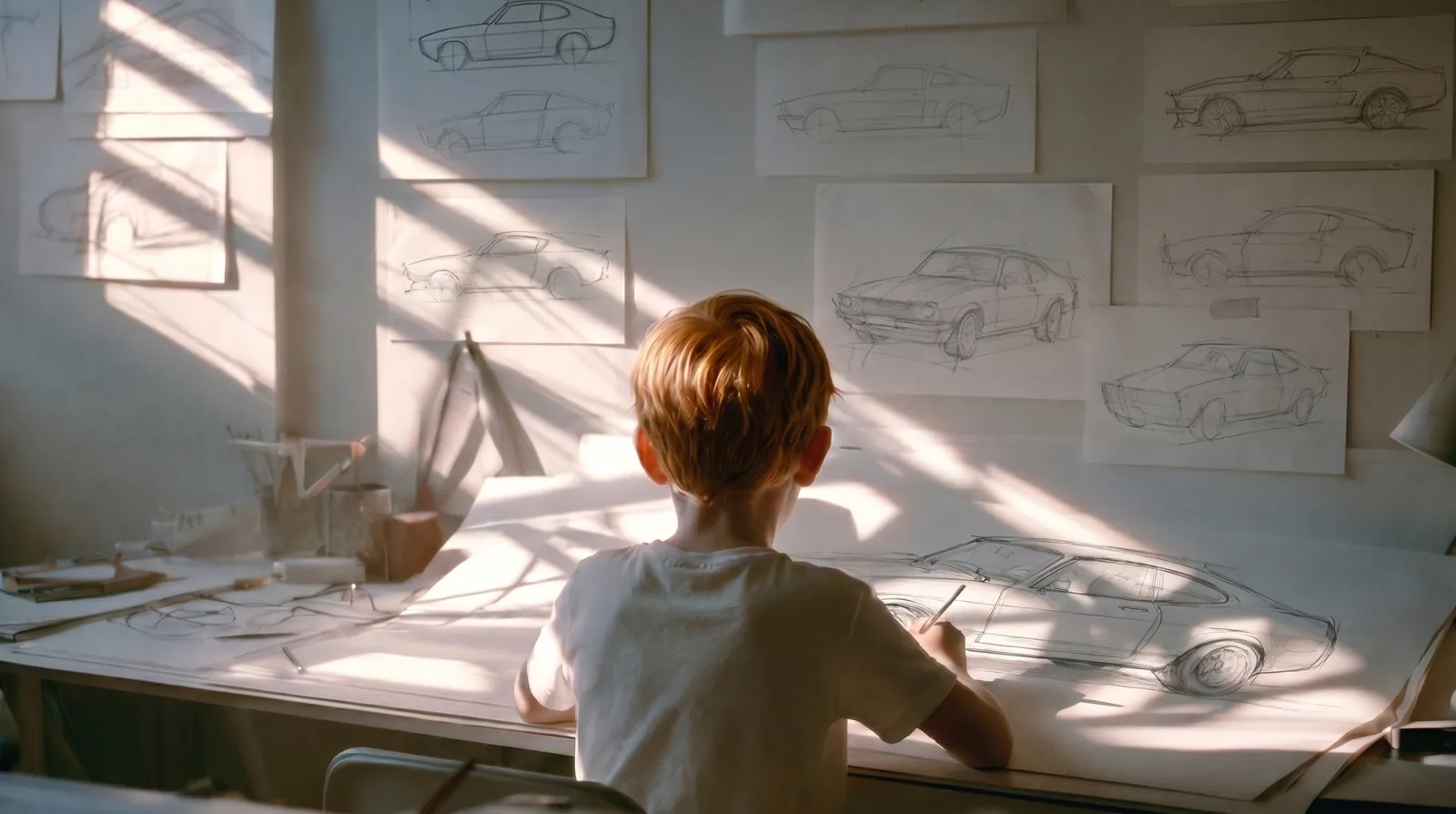
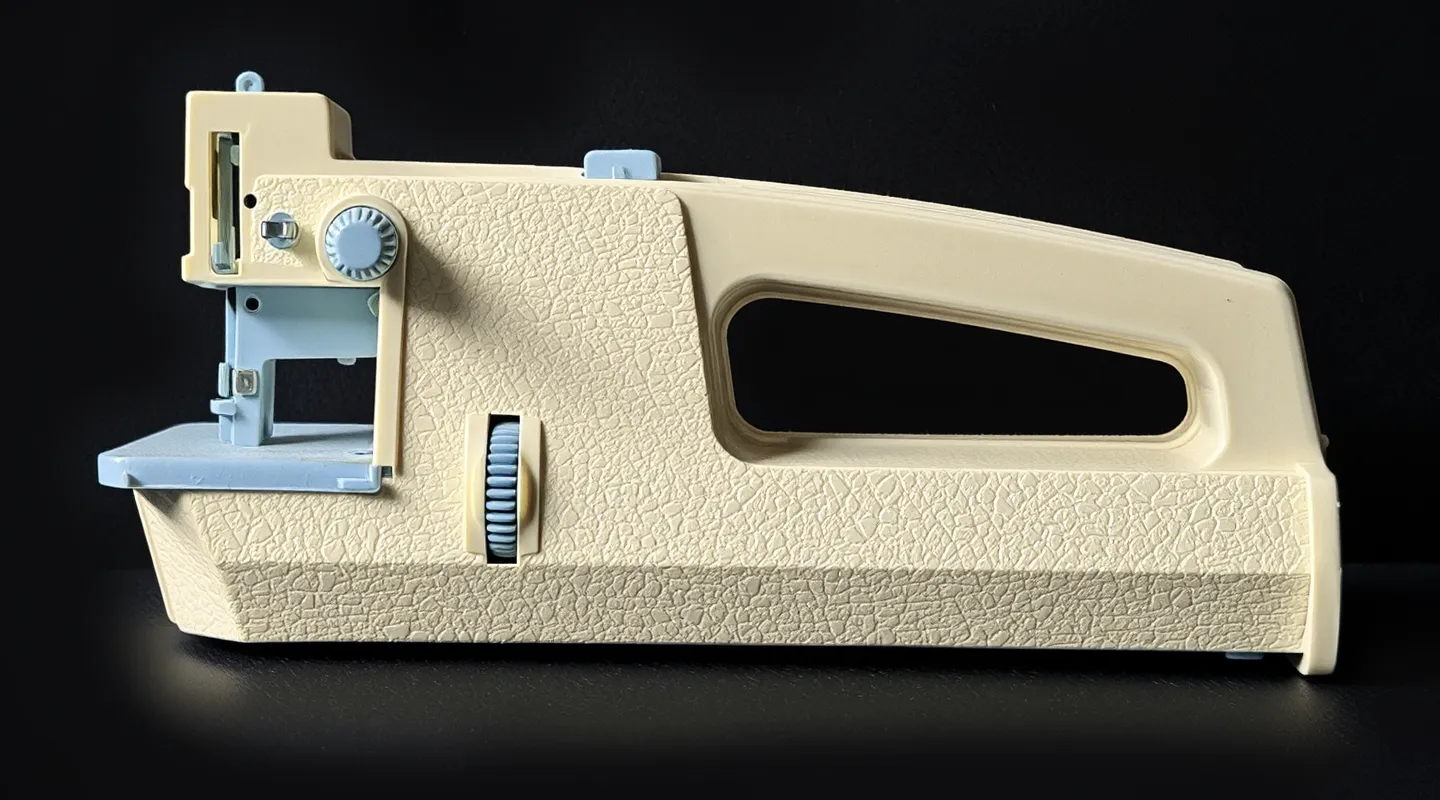
The project began with memory and a small physical object: a handheld sewing machine. Not as references to copy, but as material DNA to test.
The training set was 14 images of one object. The rest emerged as the project evolved.
Memory gave the project direction. The source object gave it a material system. The work became making those two things meet, then scale.
Before form,
there is structure.
Before structure,
there is direction.
The task became blending the childhood memory with the source object's cues — until they formed a legible system.
Material exists before object.
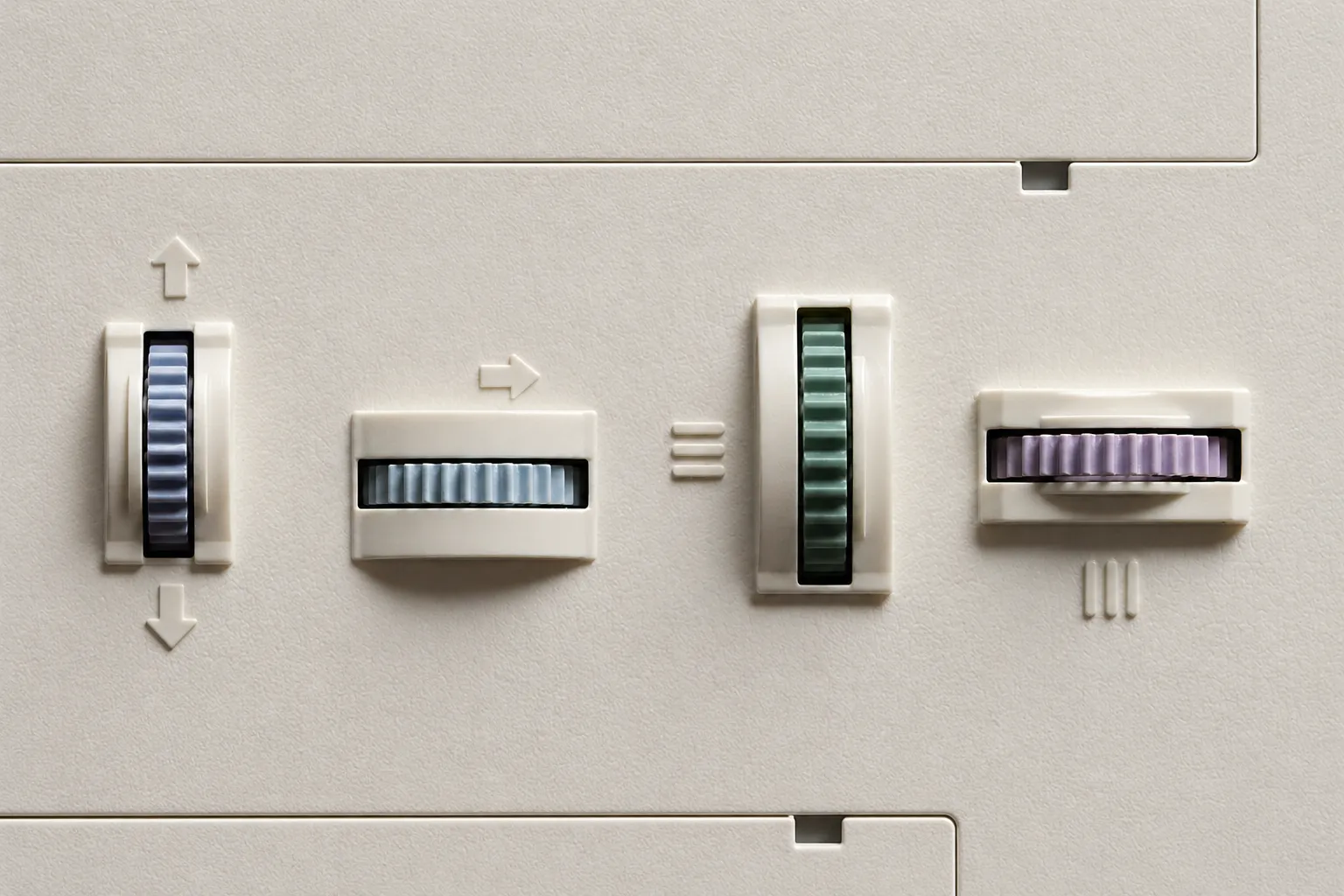
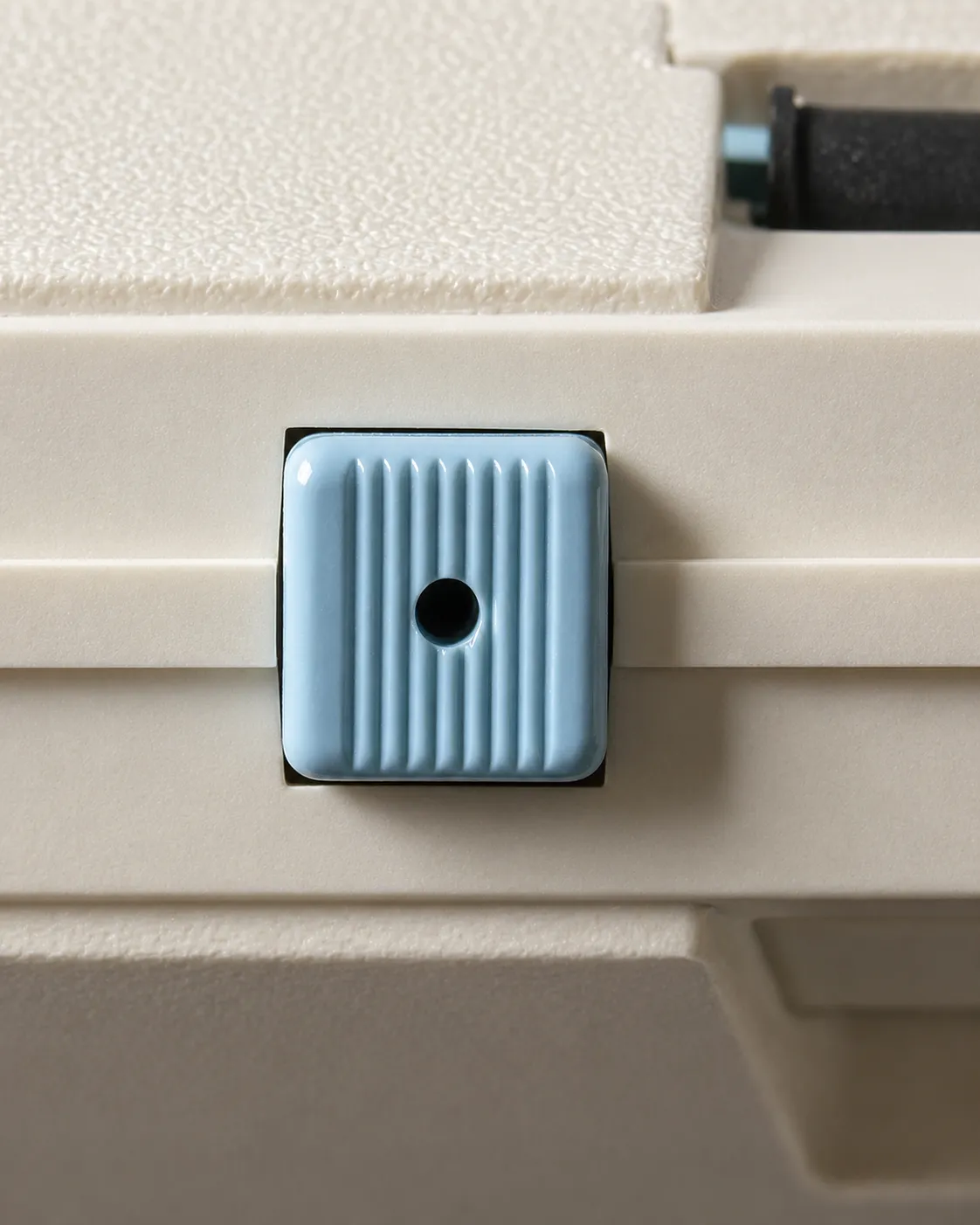
Close-up seams, ribbed structures, fasteners, panel joins and moulded textures became the first signs of a visual system.
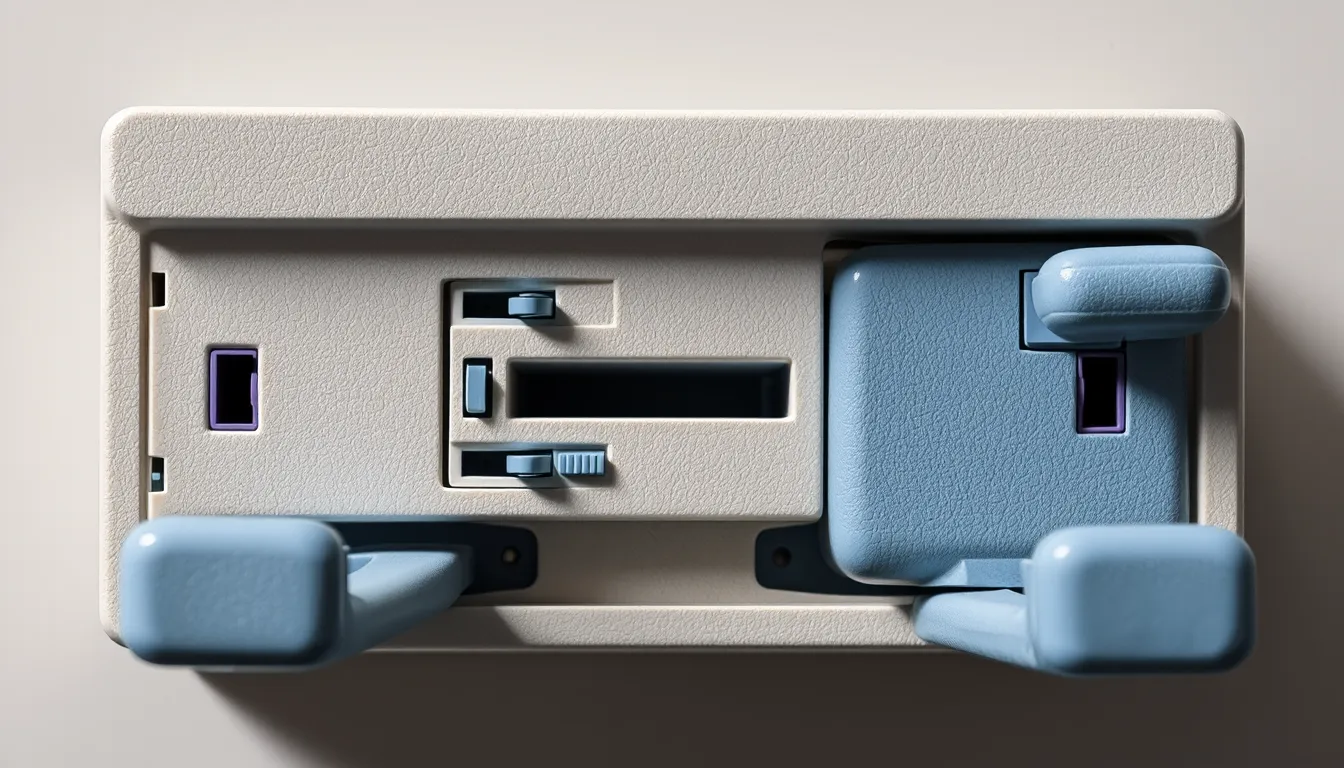
sewface is built through recurring cues: moulded surfaces, pastel panelling, soft industrial colour, visible joins and controlled geometry.
Surface logic
Join behaviour
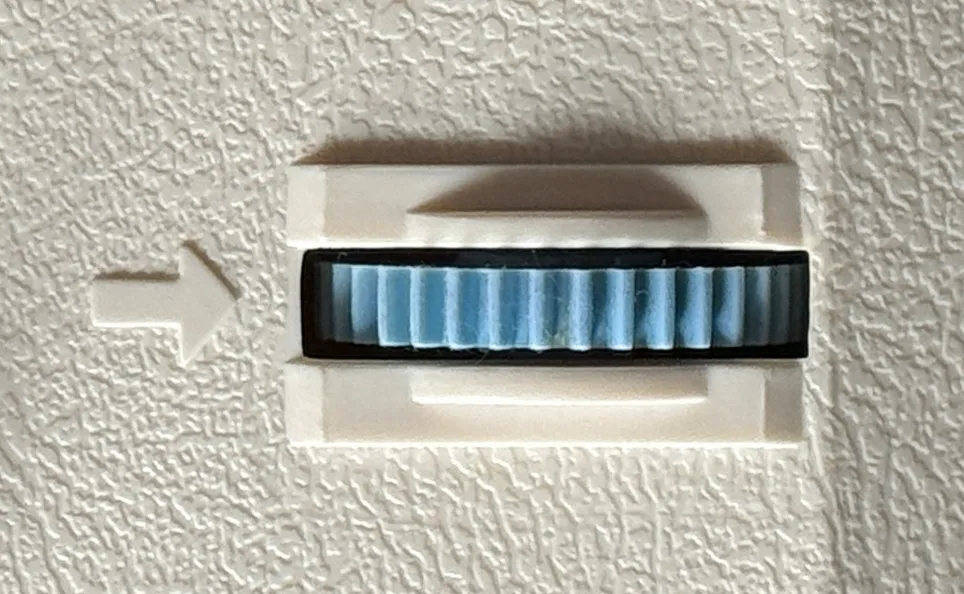
Material cues
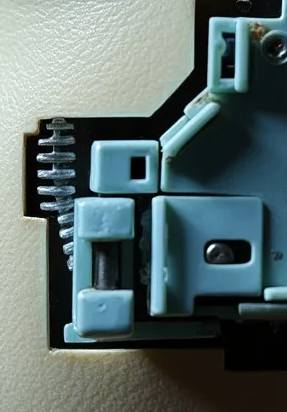
Form language
Each surface decision implies the next. The system accumulates through repetition.
The system was not simply prompted. It was constructed.
A custom LoRA workflow was developed to turn source material into a repeatable visual language. The training process became part of the design thinking. The project asks whether a system can be owned, not just admired.
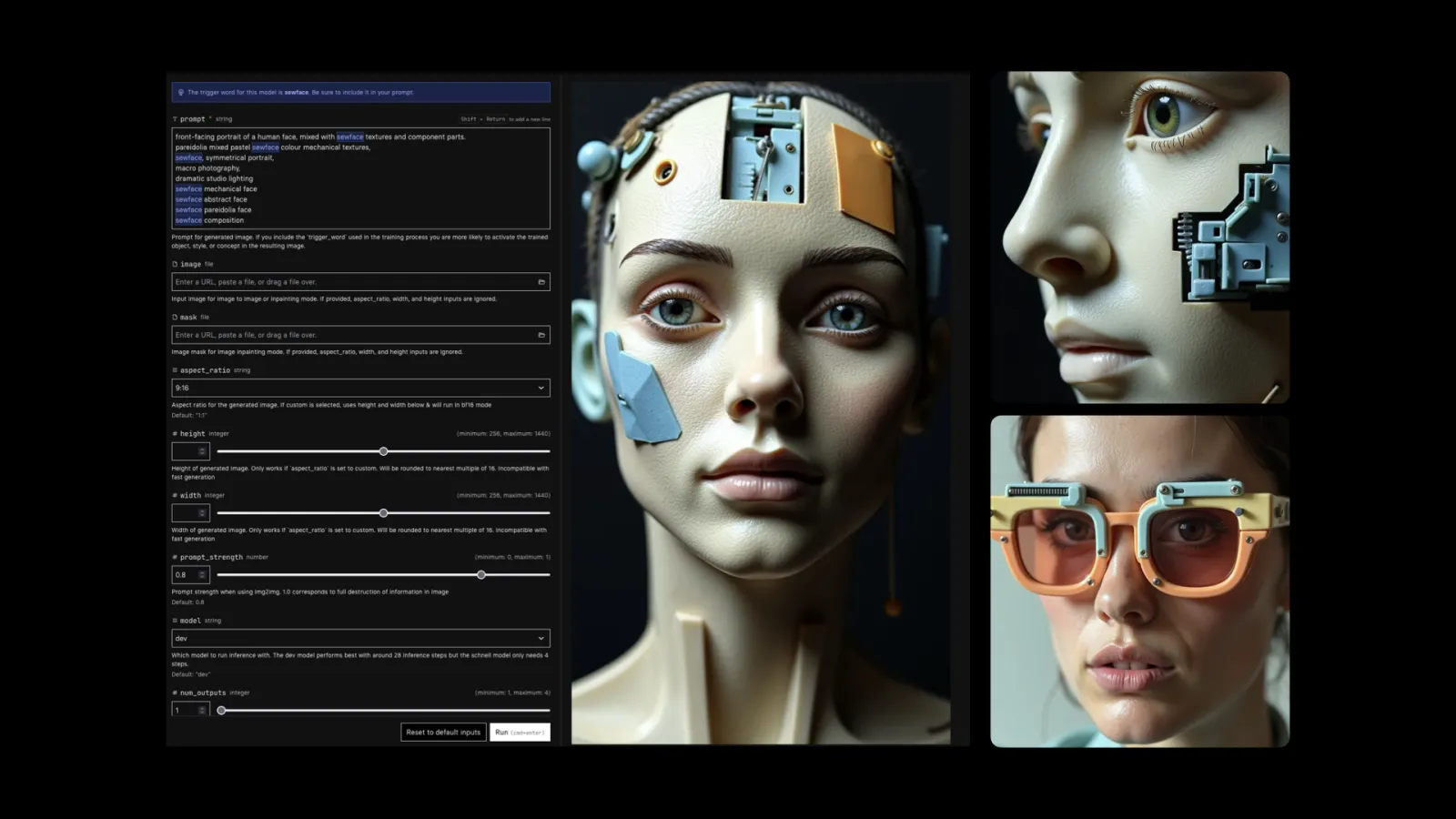
Direction is the filter.
The LoRA produced options, but not every generation worked. The wider system had to be directed through language, rejection and correction until the material logic returned.
Selection and correction are where the direction lives. What gets kept is as deliberate as what gets made.
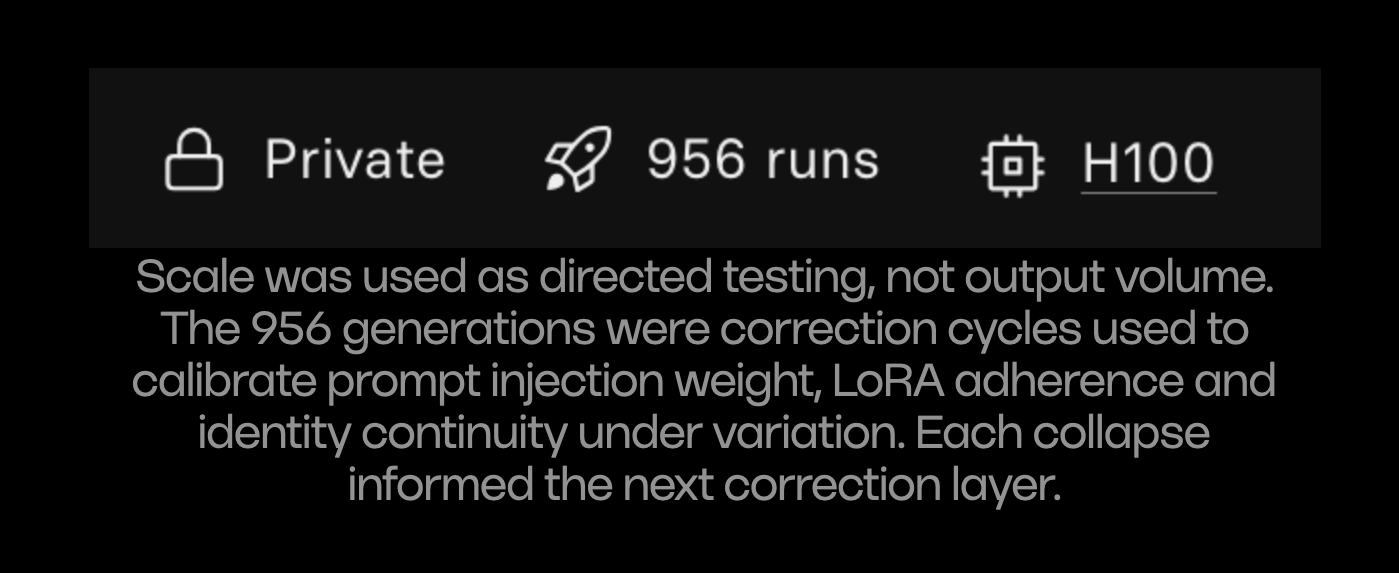
What “ownable” means here.
A generative material system is only useful if it can pass four tests.
recognisable
The same material DNA can be identified across outputs.
repeatable
The language can be generated again, not just once.
controllable
The system can be directed through prompts, references, weights, interfaces and craft.
distinct
The outputs do not collapse into generic AI style.
The object becomes a test.
An object small enough to hold, detailed enough to test the full surface logic.
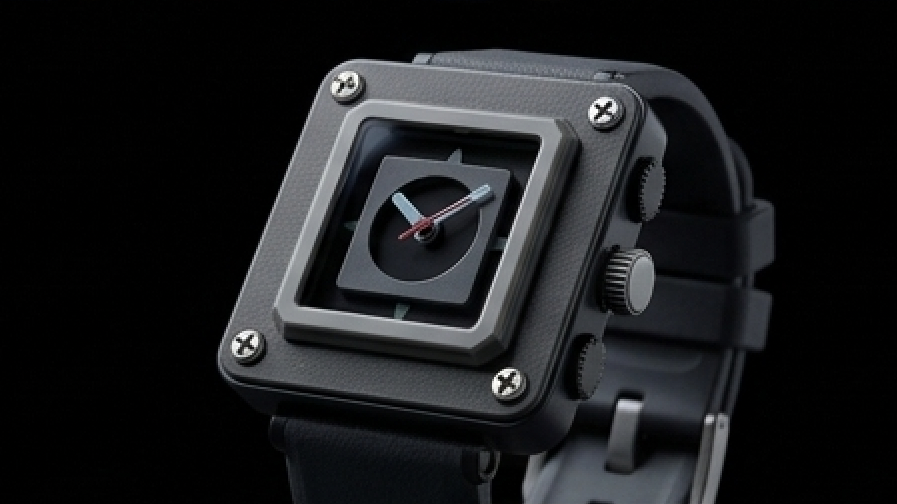
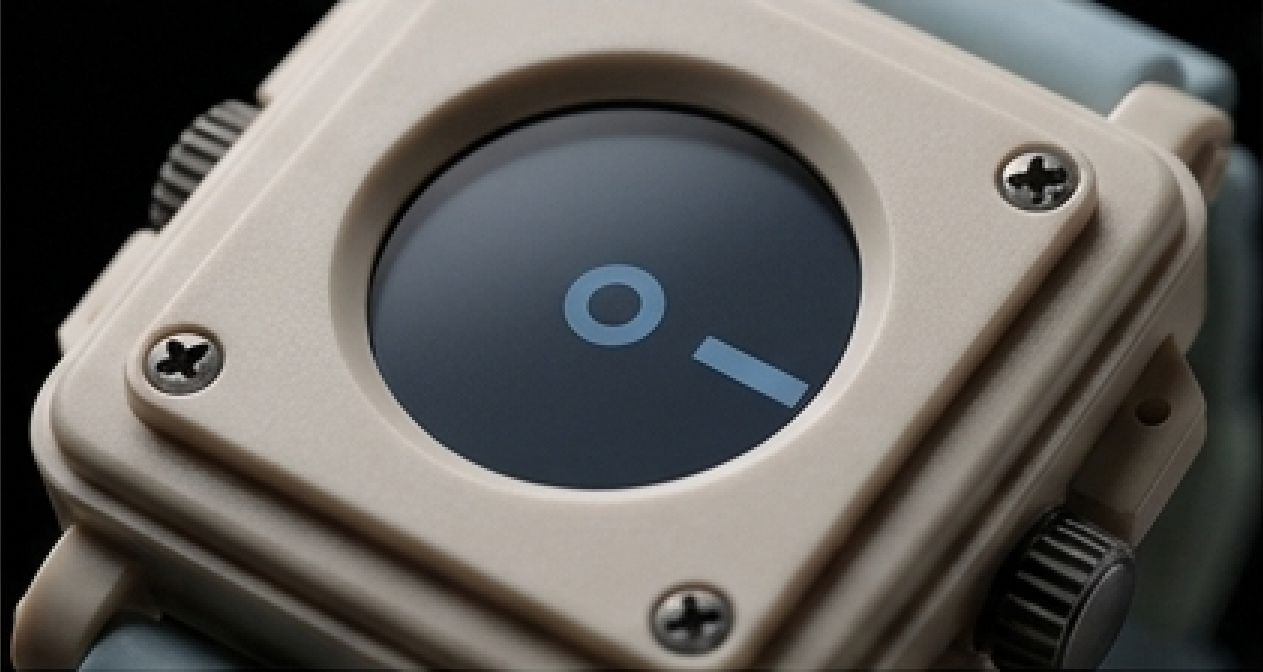
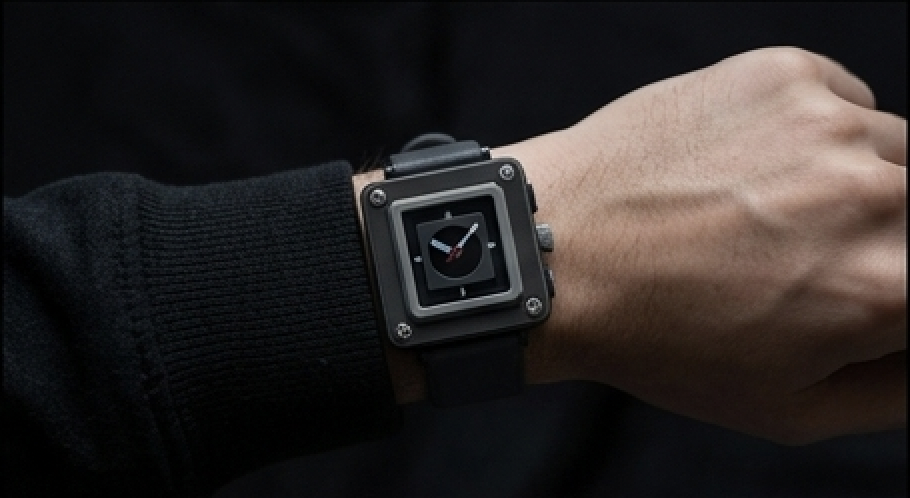
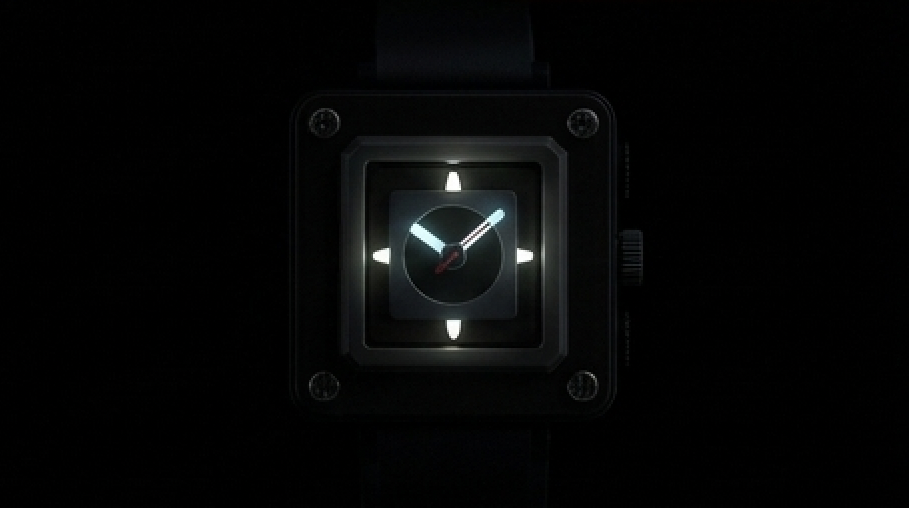
Joins, panels, controls and hierarchy — familiar geometry or material design language.
The system transfers.
Not whether it looks good once. Whether it still belongs when the context changes.
Behaviour is part of the identity.
Motion shows how the system behaves, not just how it looks.
Mechanical movement and smooth synchronised transitions test whether the material language holds as behaviour, not just surface.
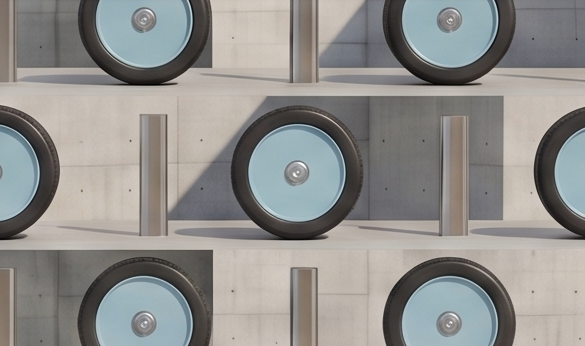
Movement turns recognition into proof.
Rules hold under change.
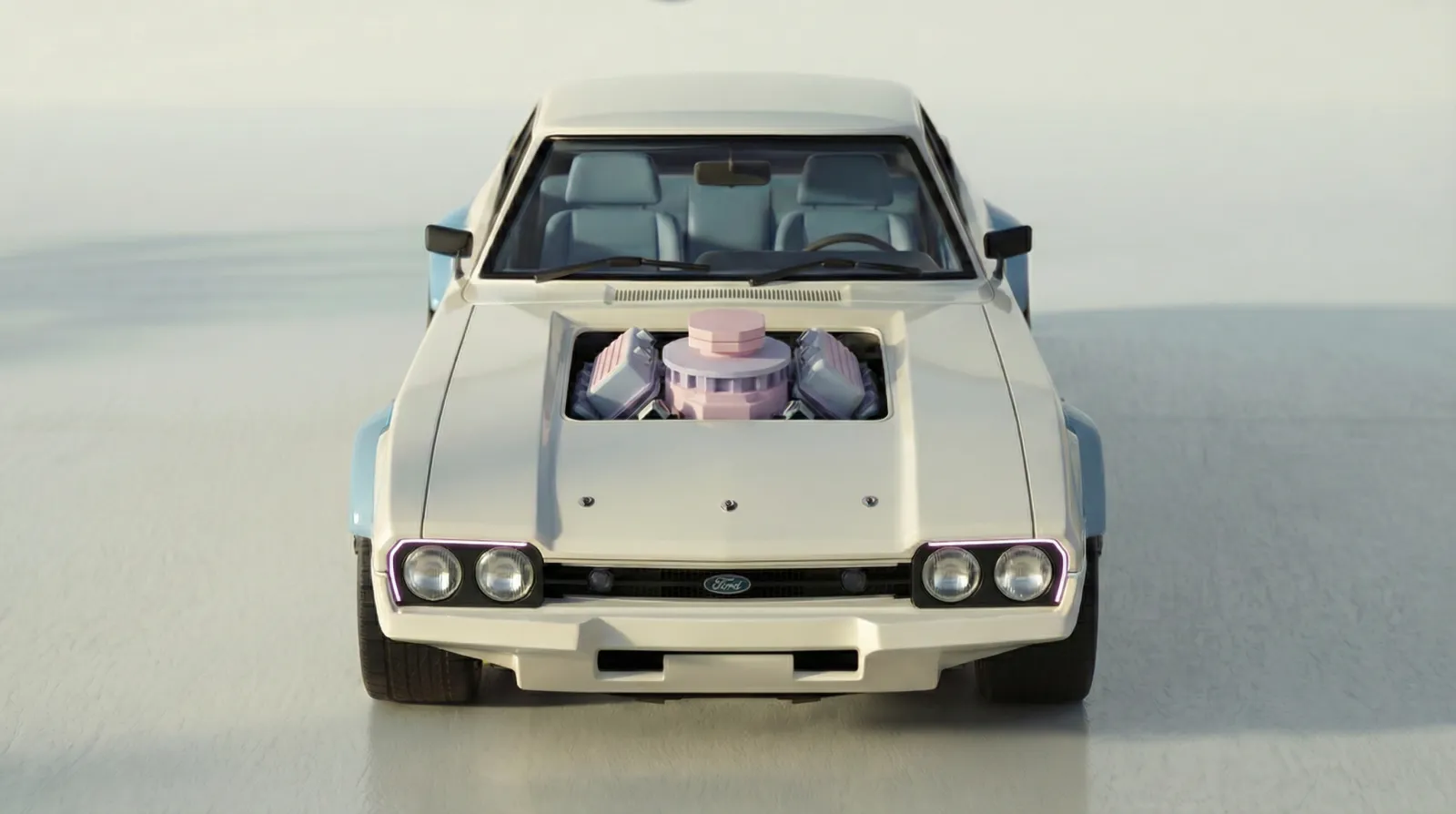
Detail, dashboard, engine bay and bodywork reveal the same logic at different distances.
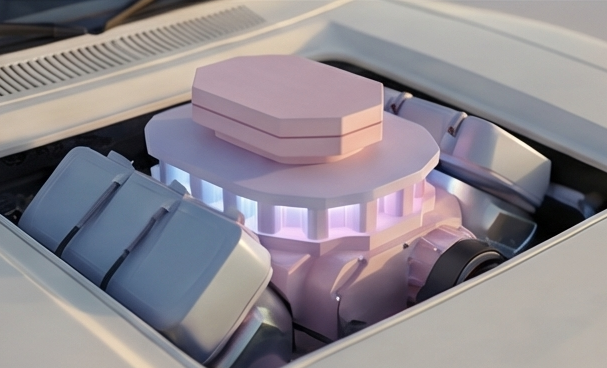
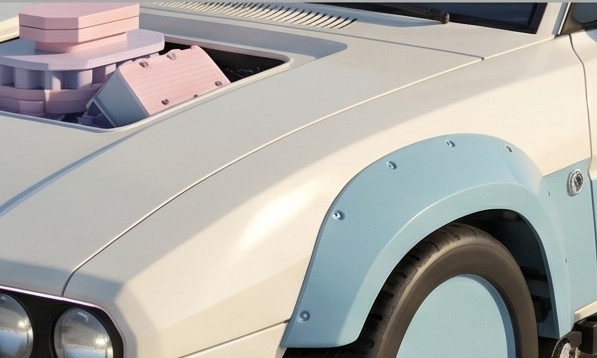

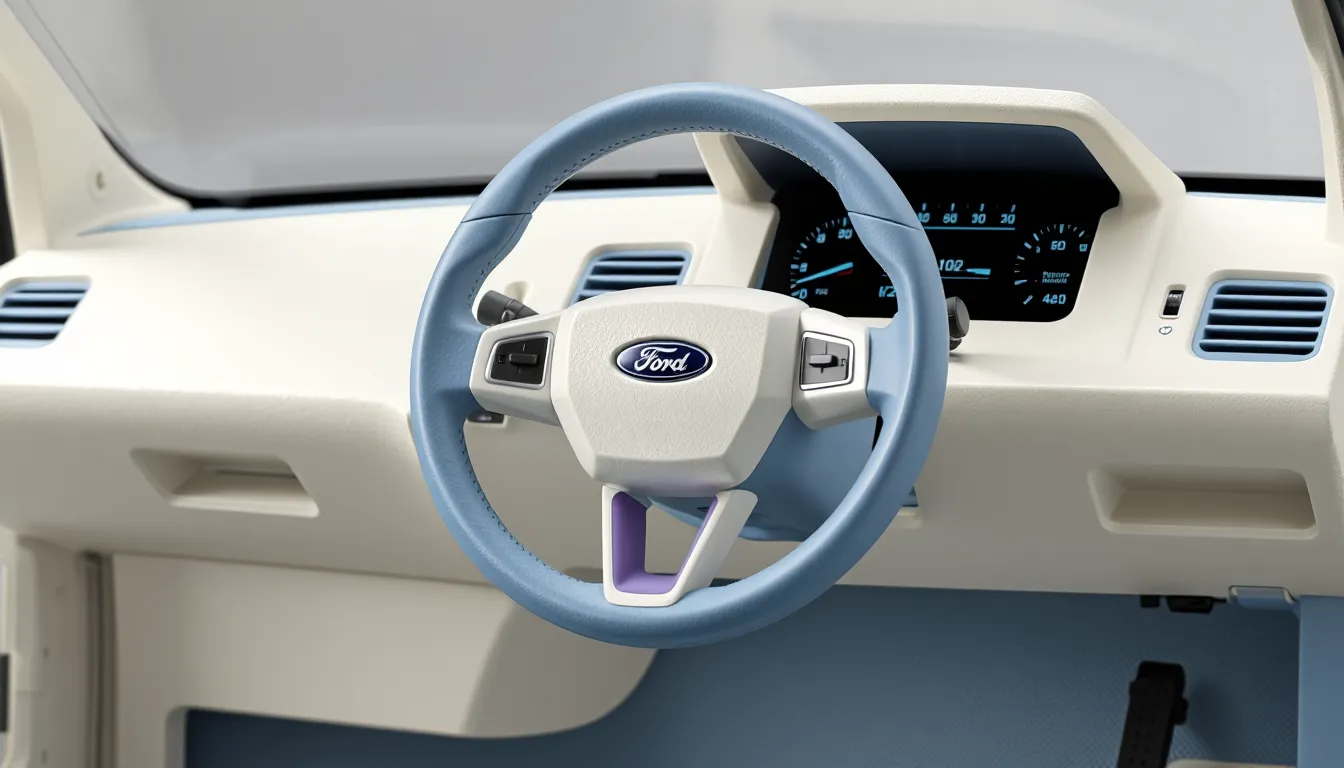
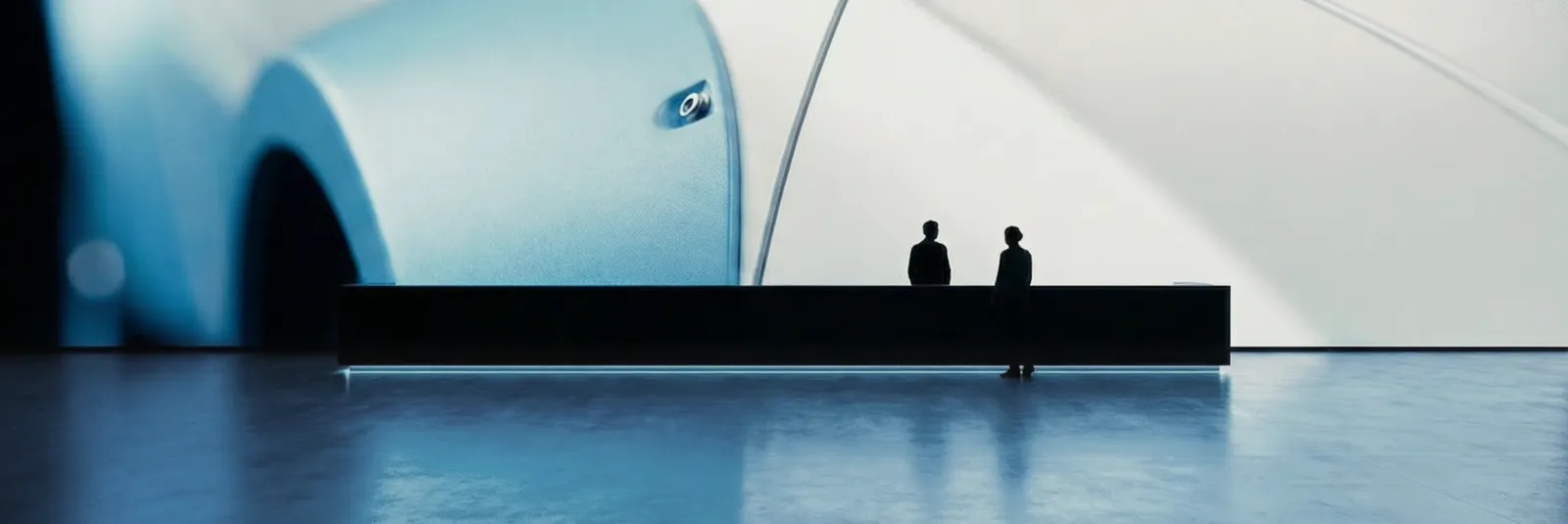
Consistency means recognition under variation.
The same material language. Three forms.
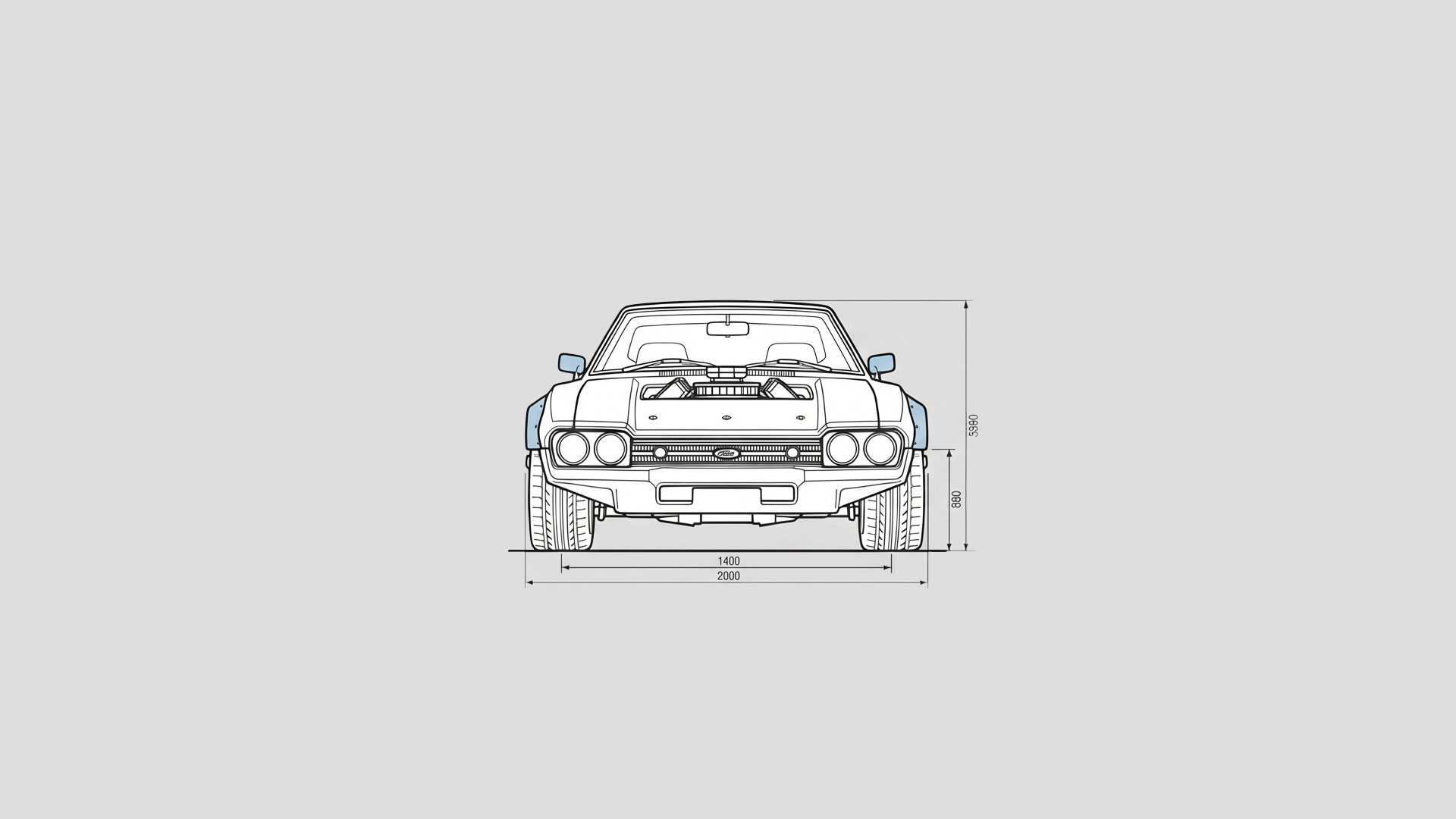
Modular panels, visible joins, fasteners, ribbed structures, layered hierarchy and pastel material logic.
The system begins to form a world.
Once the same cues hold across objects, they begin to form a wider world.
These environments are not finished architectural proposals. They are stress tests for whether the material system remains recognisable at spatial and public scale.
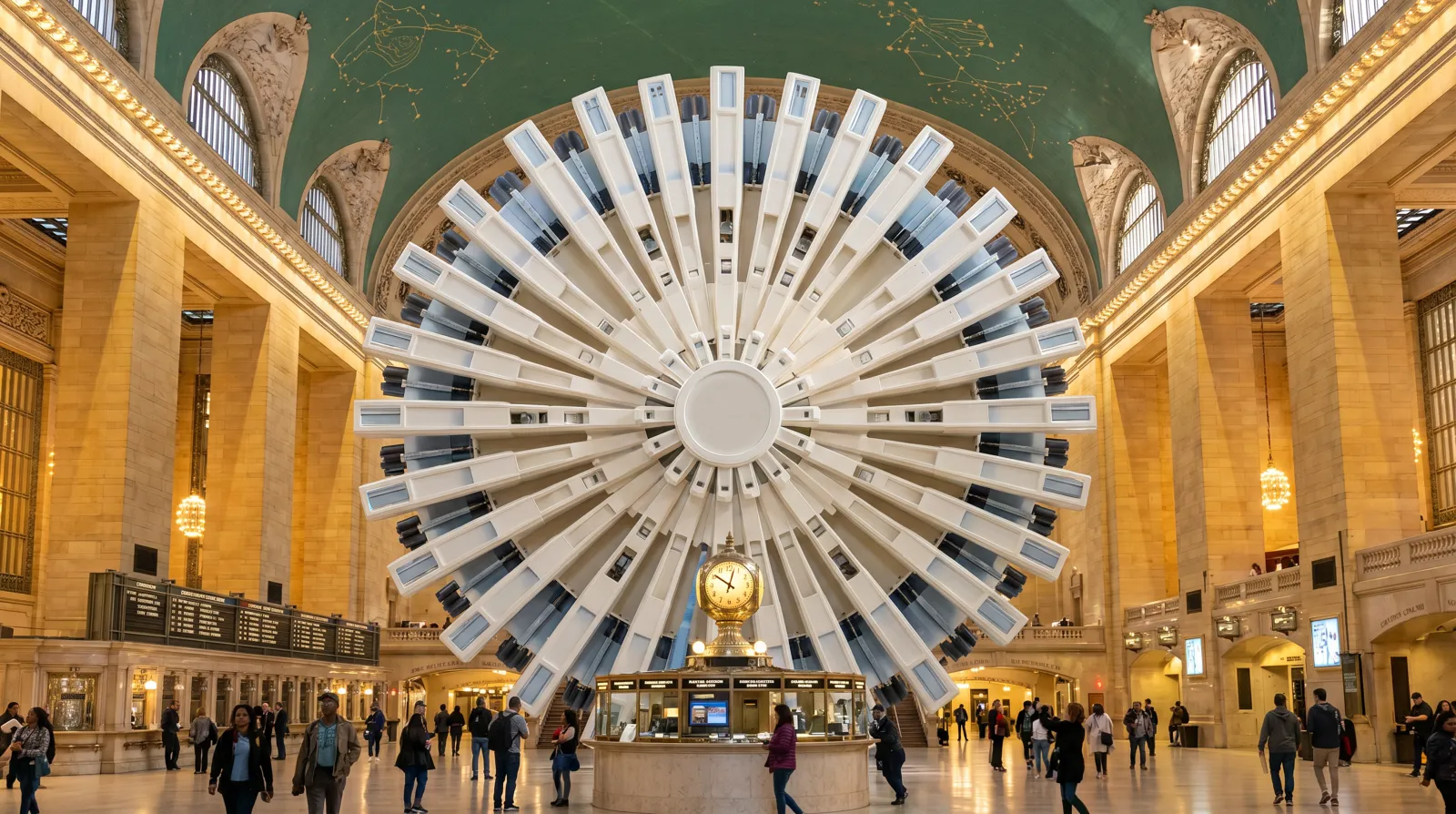
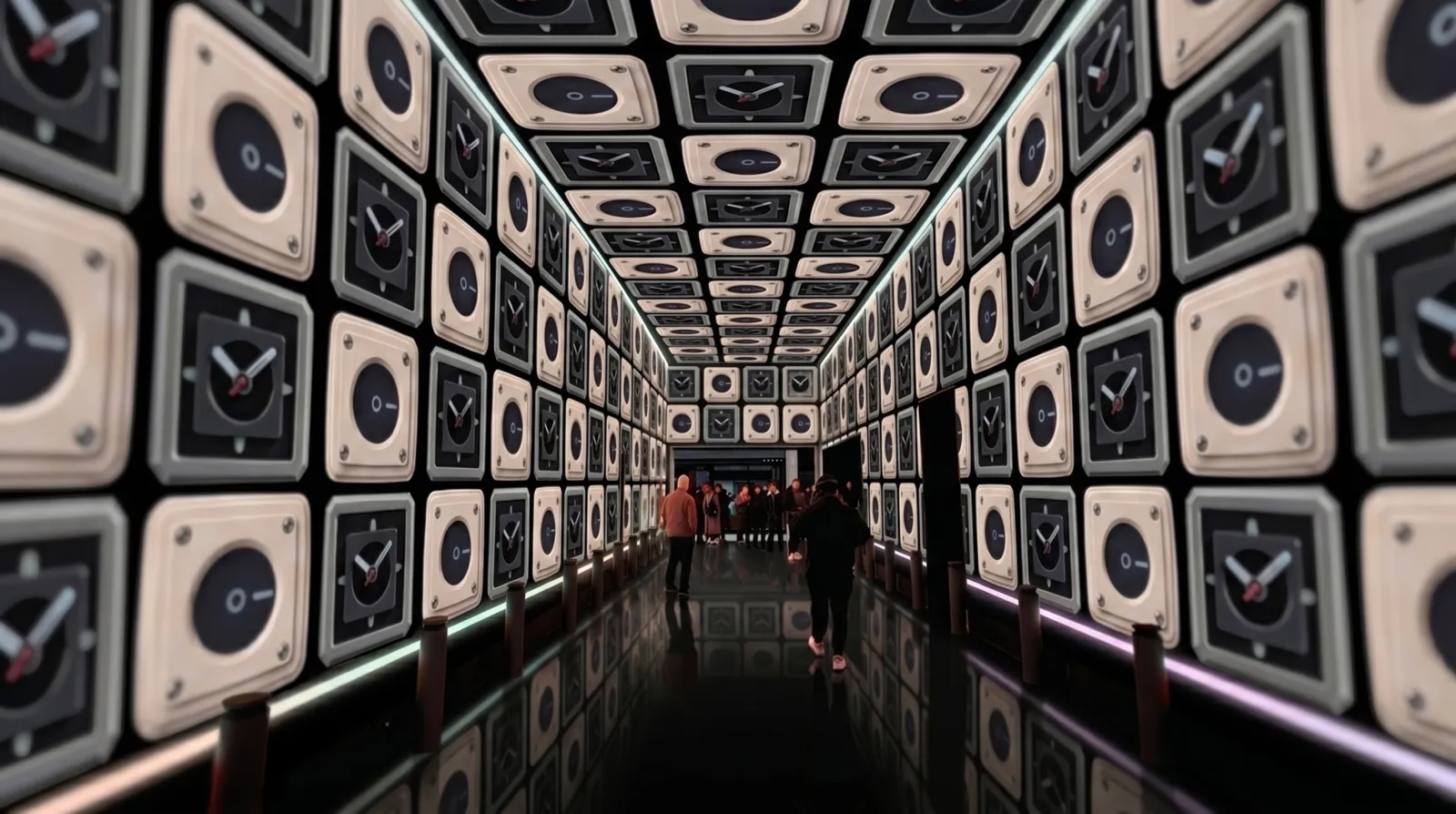
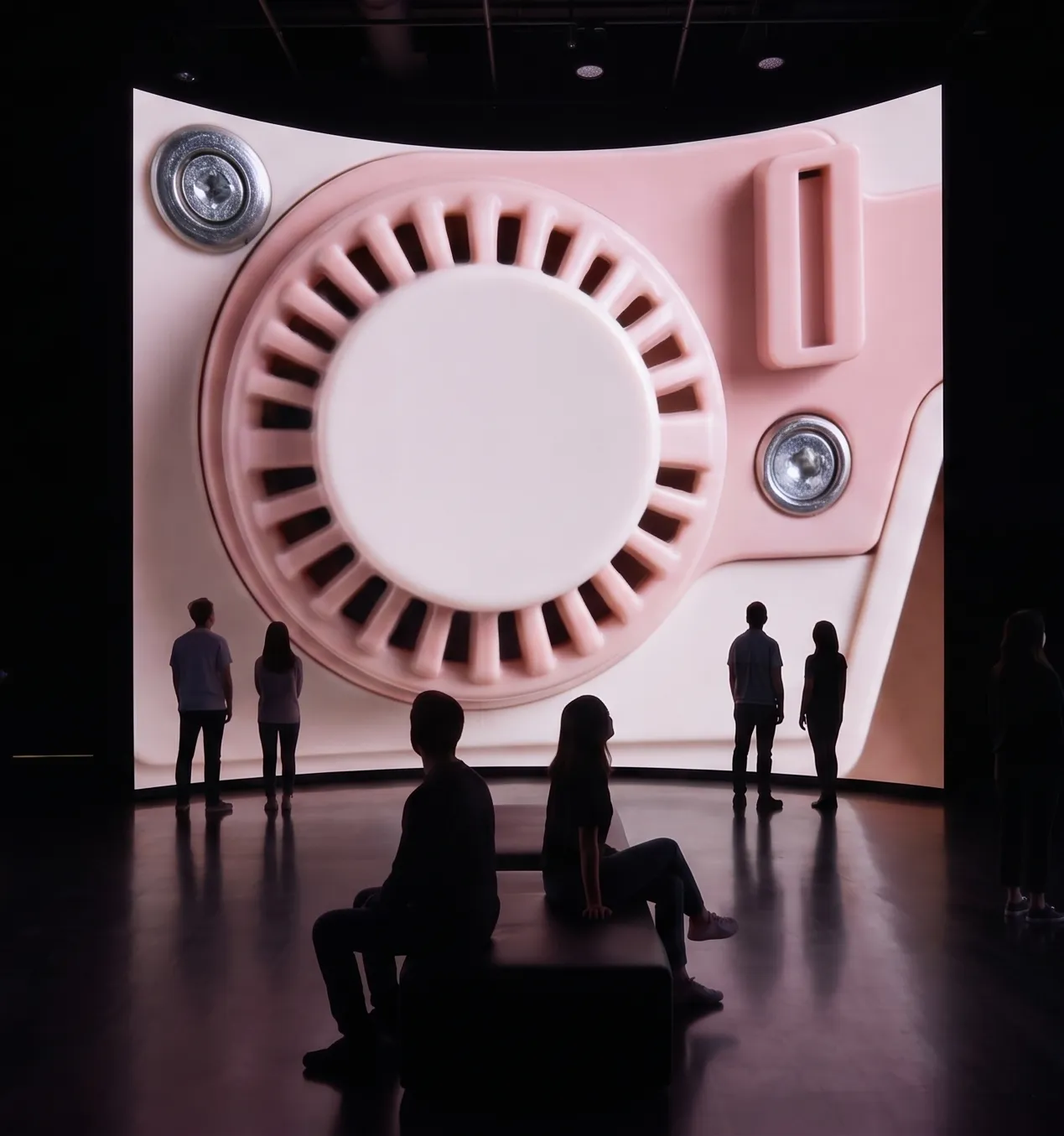
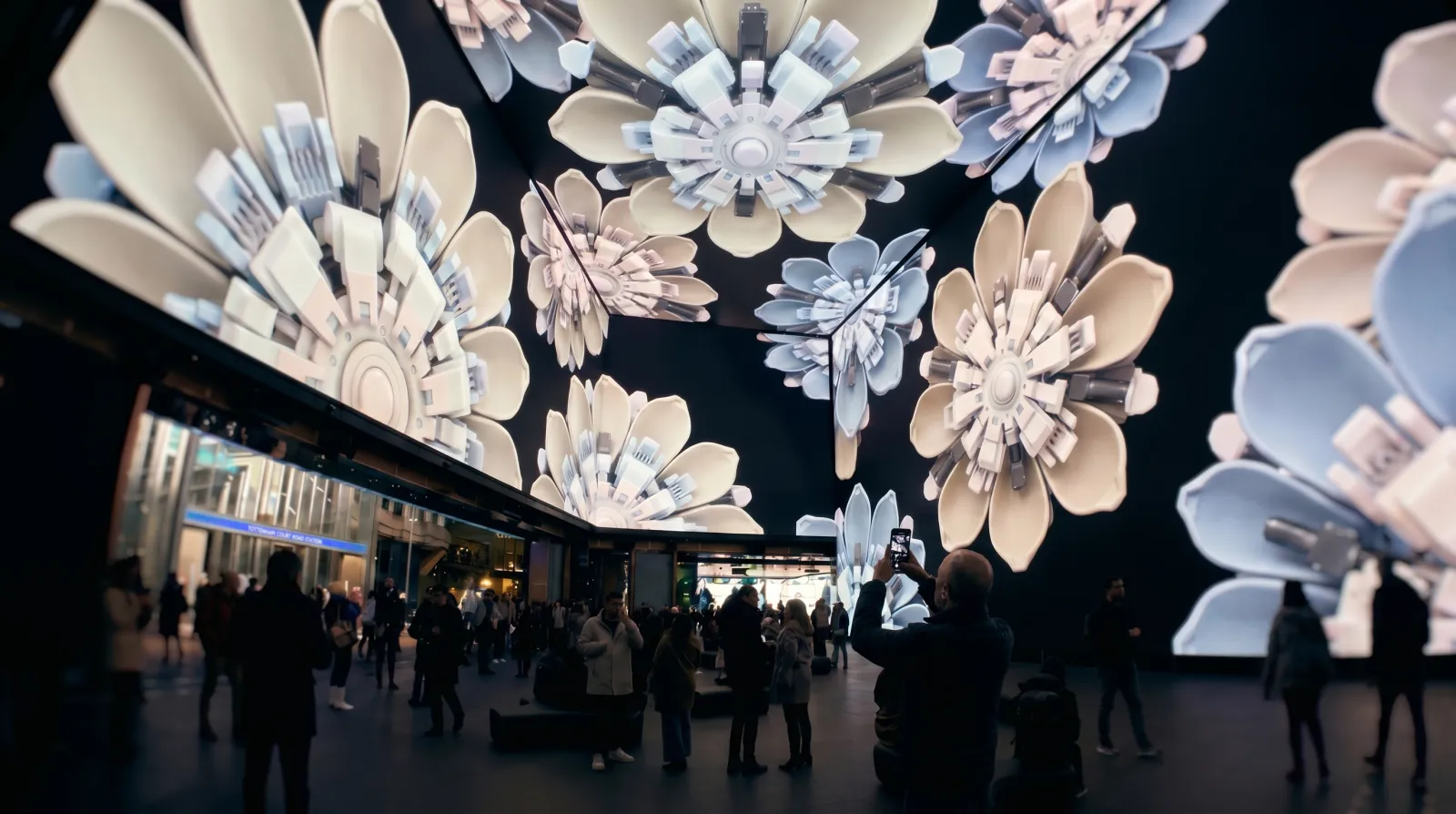
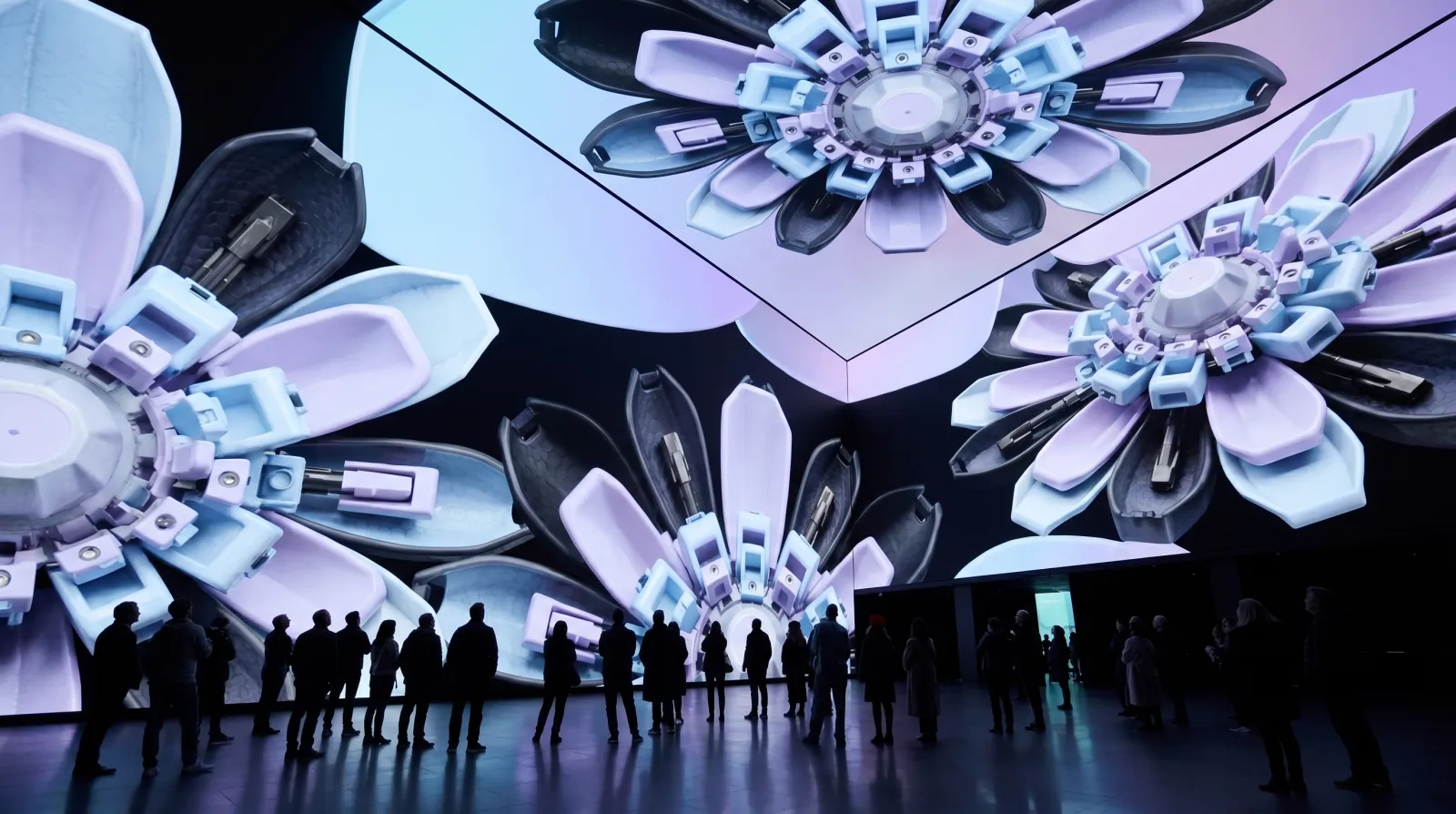
Not just product logic. Identity, atmosphere and lived spatial experience begin to emerge.
Custom sewface UI
The sewface UI is the control layer that's part of the system. It makes the relationship between training data, prompt architecture and semantic injection repeatable, so the system can be directed rather than re-prompted from scratch.
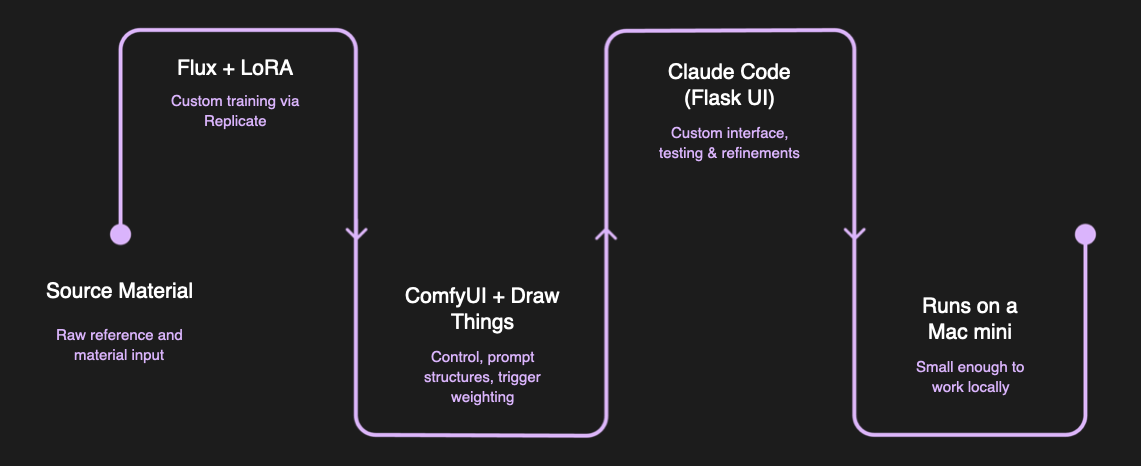
Stack diagram
The sewface visual language is emergent, not pre-designed. The LoRA alone does not produce it. Prompts alone become generic. sewface appears through the relationship between a constrained 14-image training set, semantic injection vocabulary and prompt architecture. The custom UI turns that relationship into a repeatable control layer.
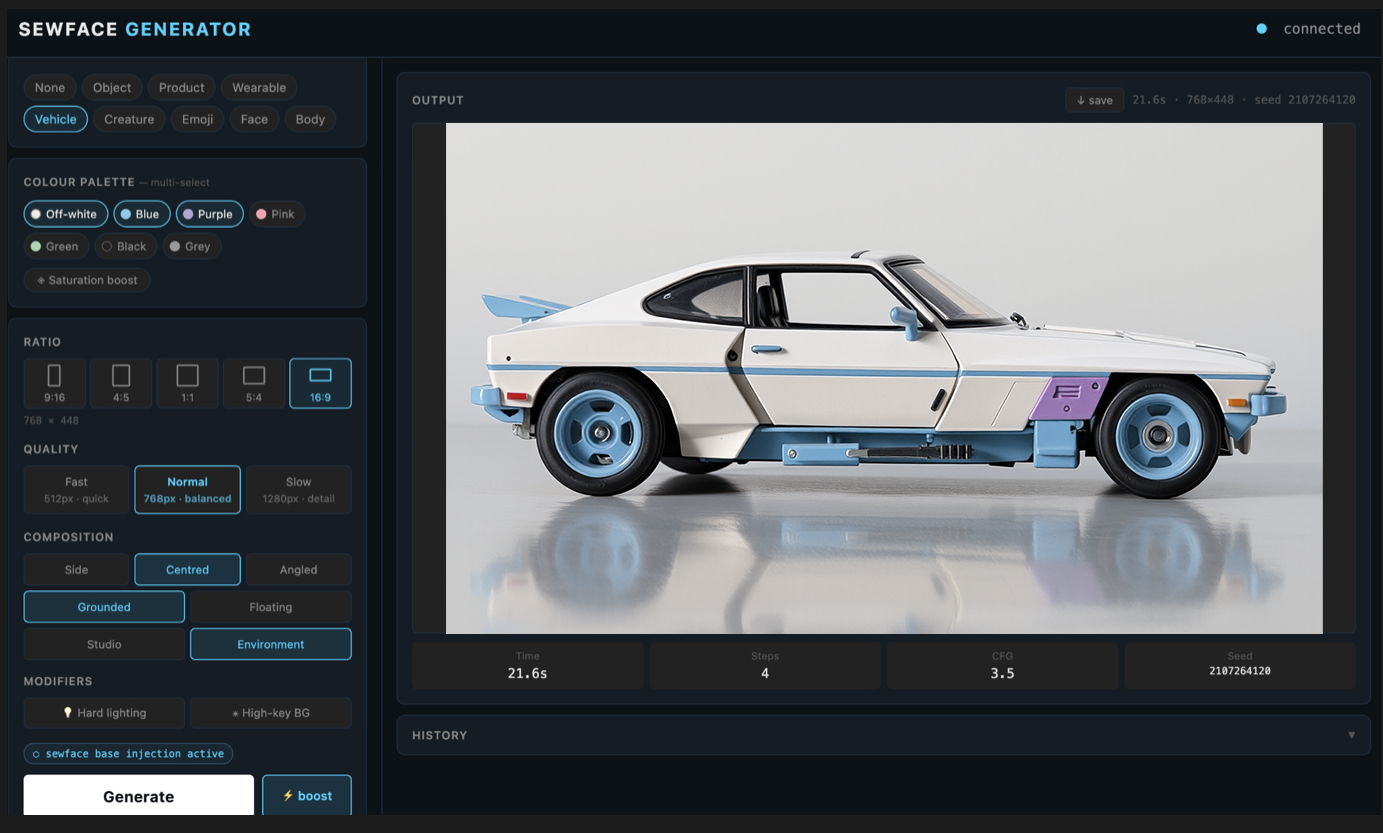
Control layer, not interface skin. Presented as presets.
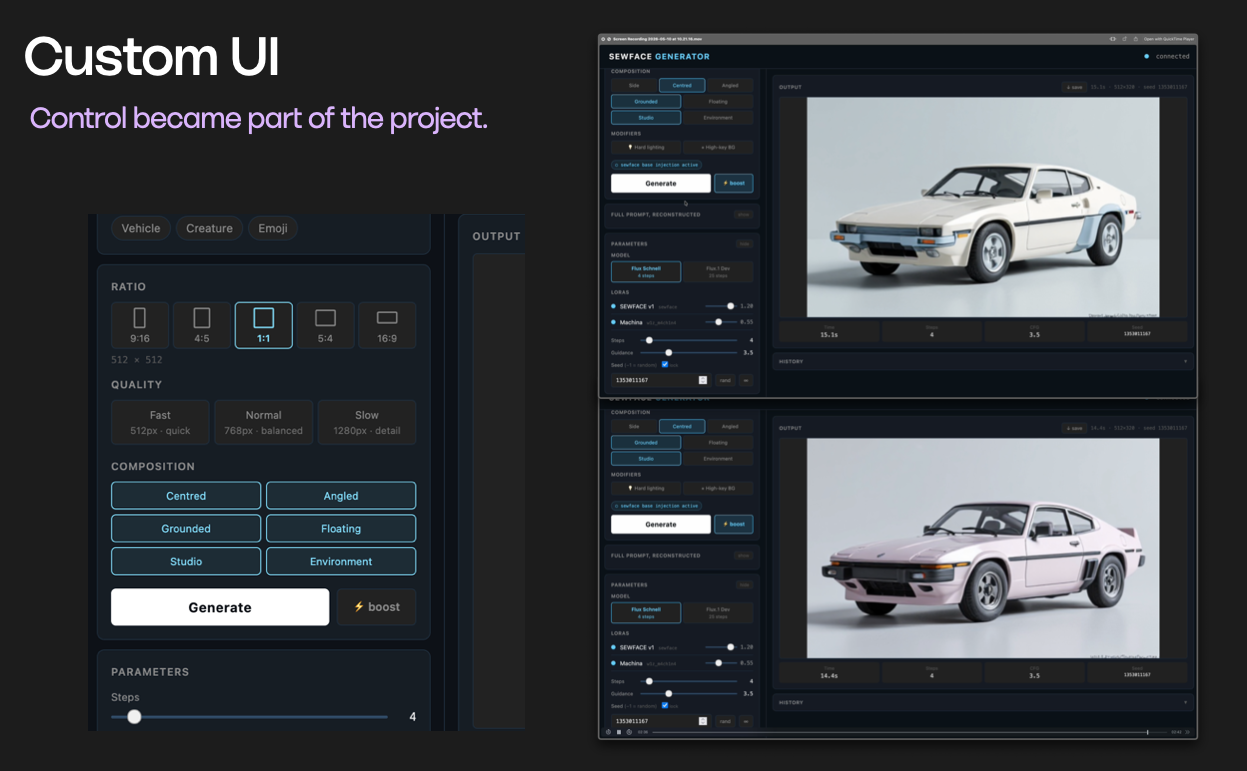
The UI makes the emergent sewface system repeatable.
Context presets, colour swatches, ratios, seeds and saved outputs become part of the creative system, not just the production process. Model selection, LoRA weights, controllable via parameters. Built to run on a local Mac Mini.
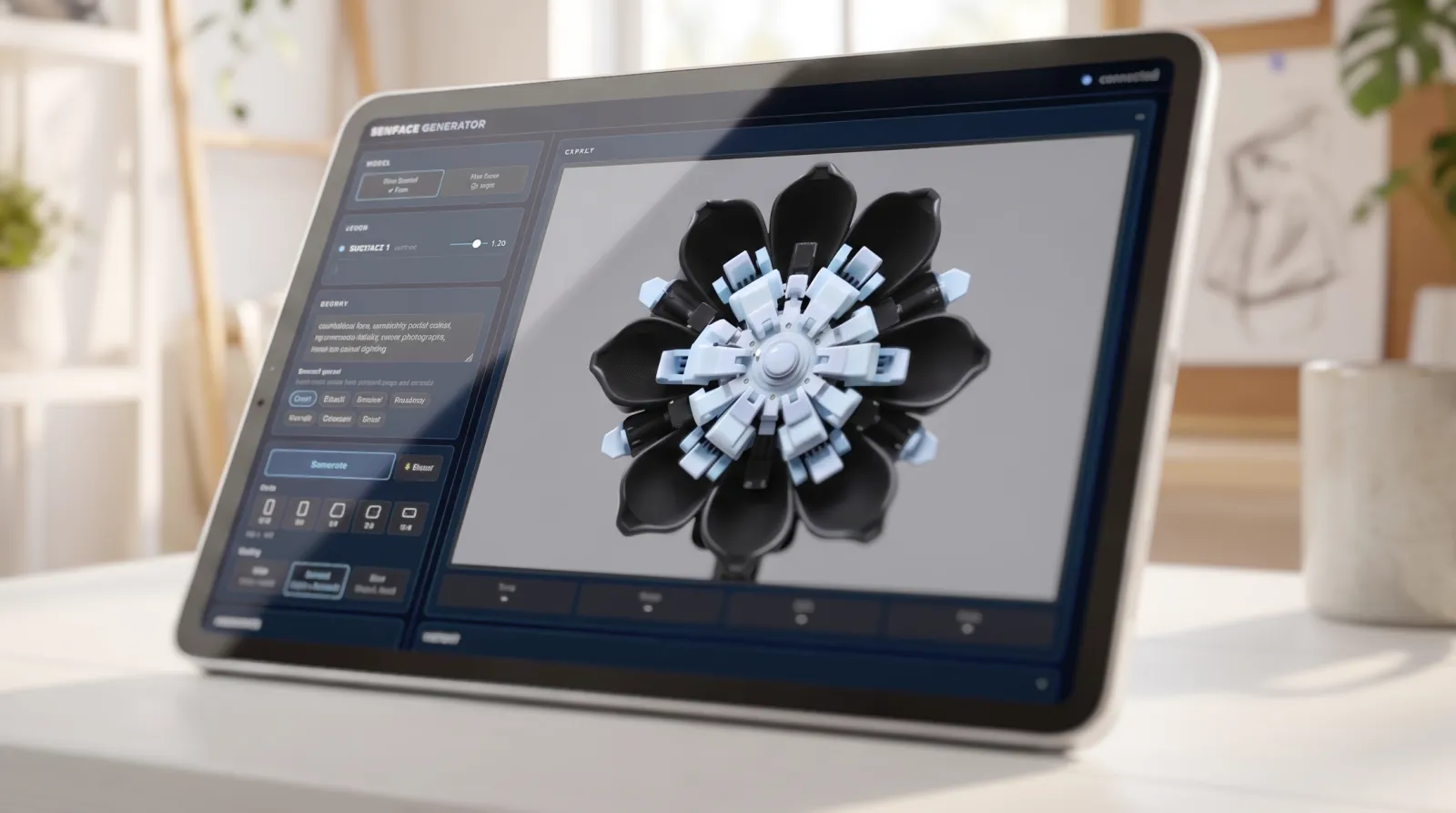
A touch interface for directing the sewface system, with generation handled locally on Mac mini.
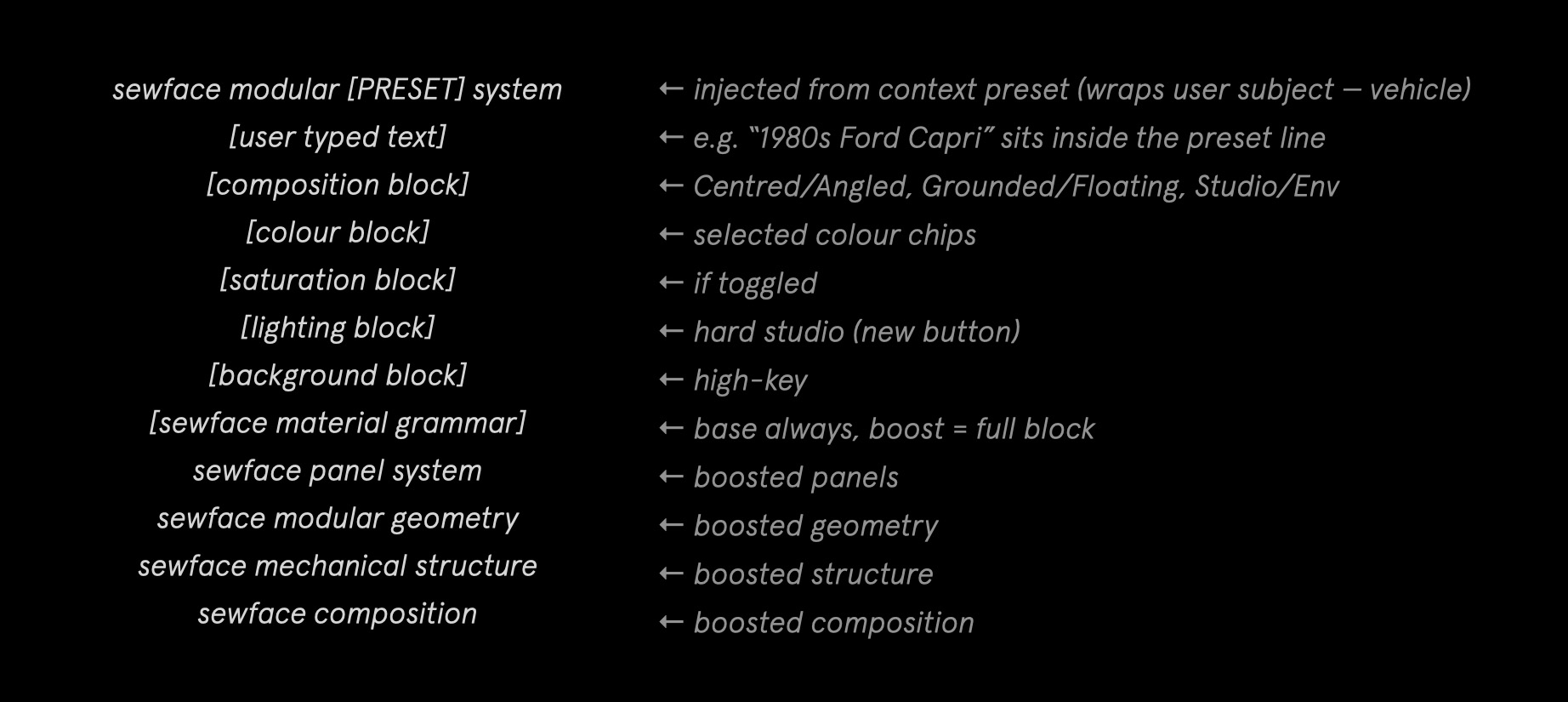
The UI does not simply collect a prompt. It assembles one.
Subject, colour, composition, lighting, background and LoRA trigger blocks are injected in a fixed order, so each output carries the same underlying structure.
The buttons are not shortcuts.
They are direction controls.
The system, deployed.
Identity guidelines, digital touchpoints, campaign outputs and editorial layouts. sewface moves from visual exploration into brand material.
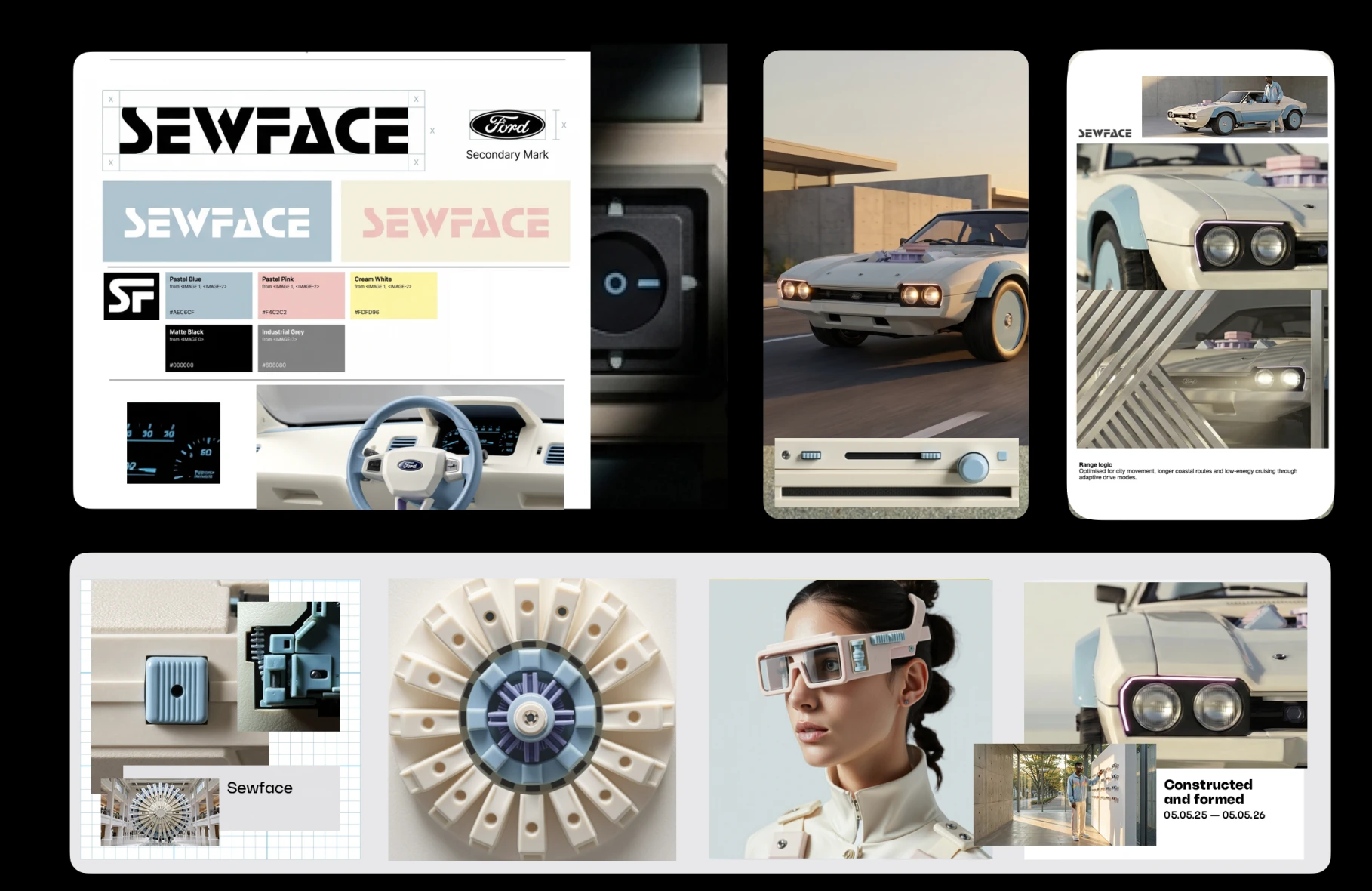
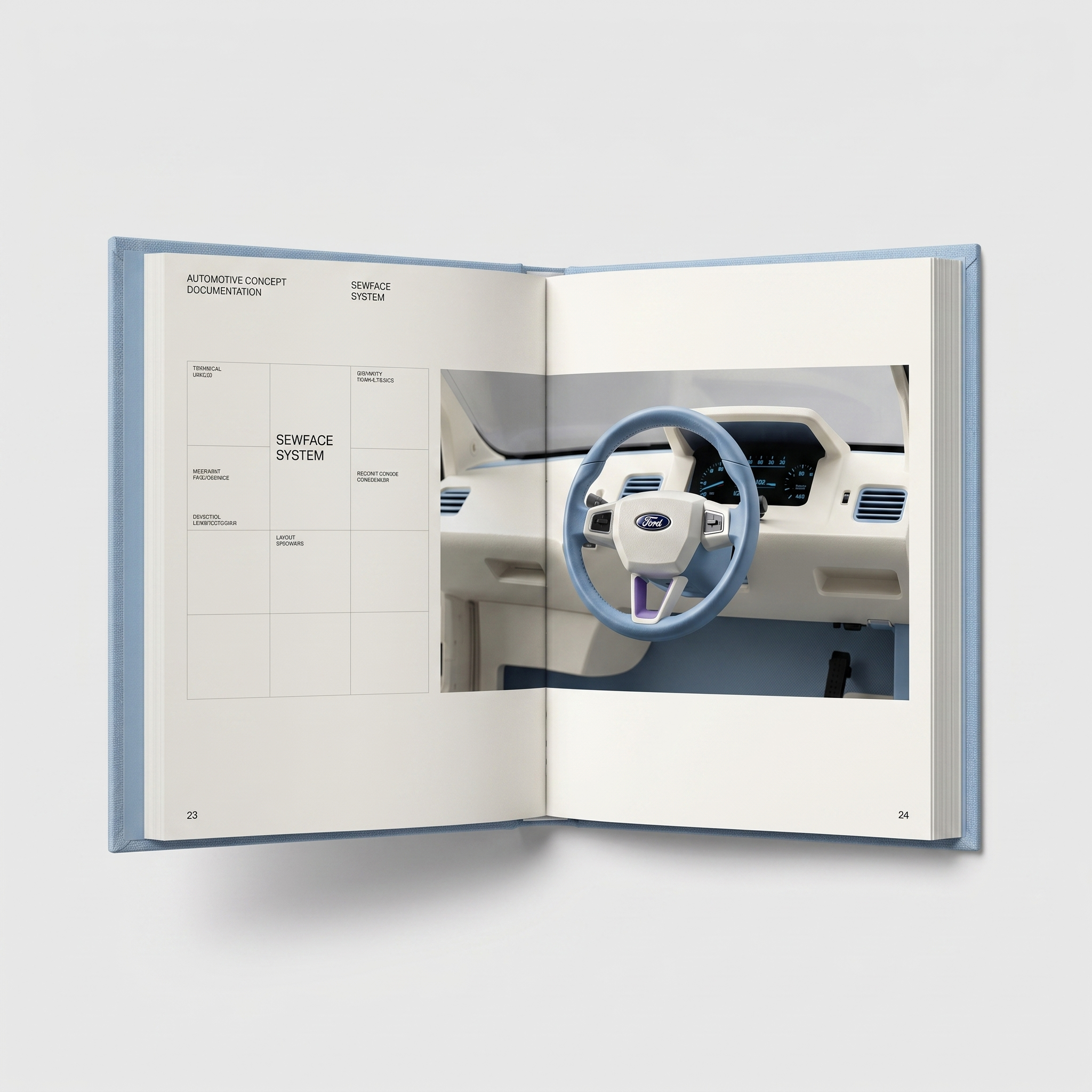

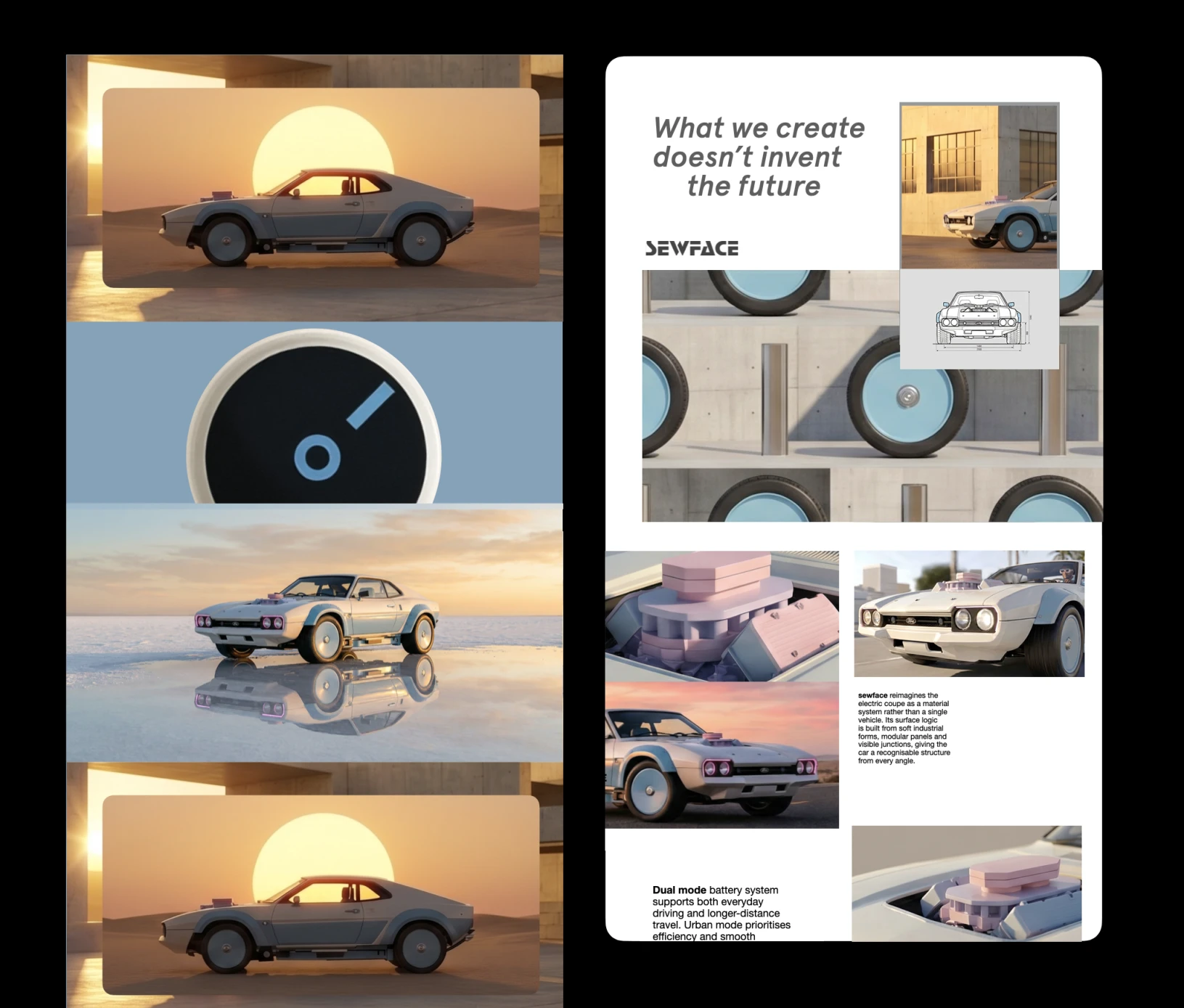
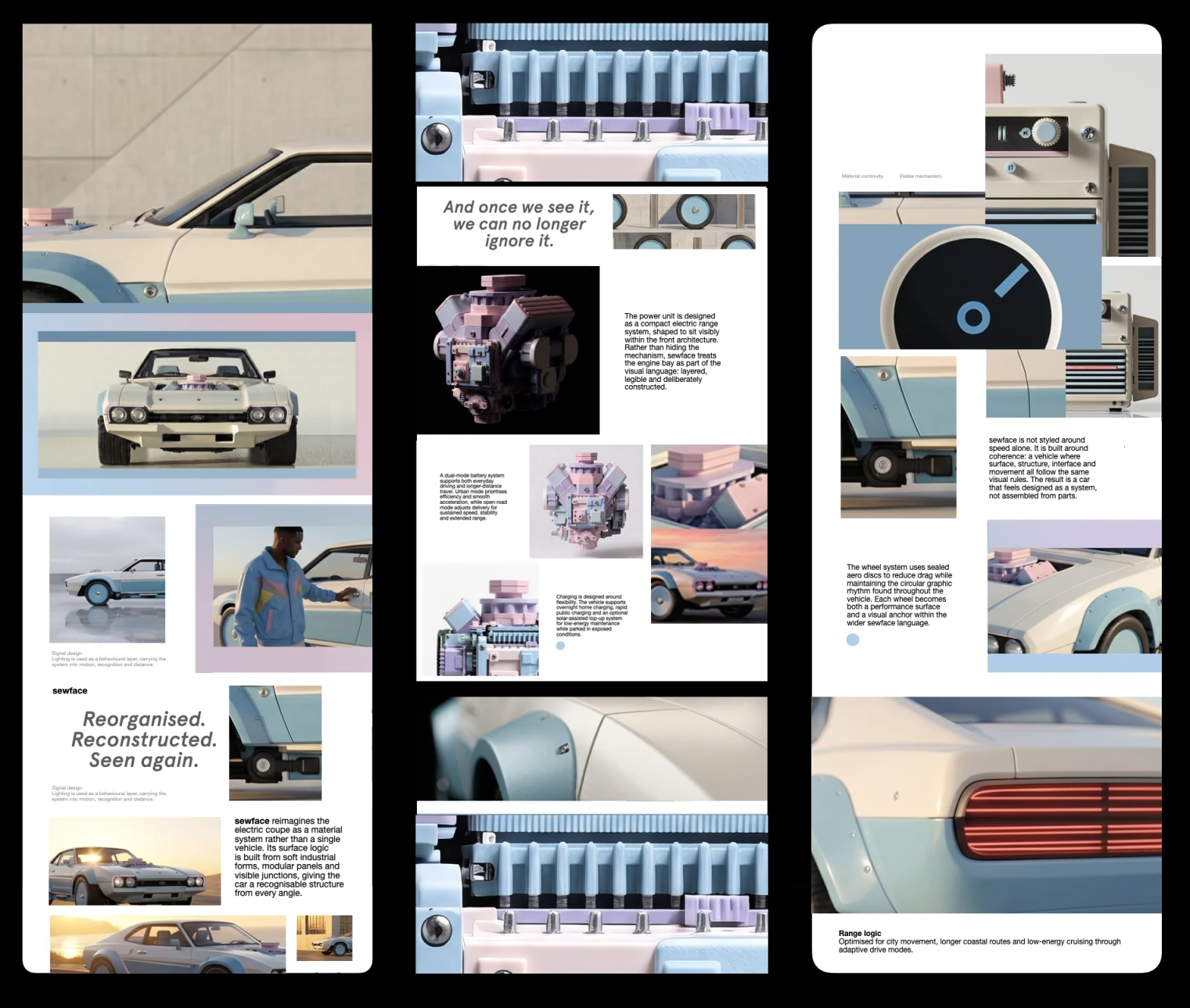
Mock-ups generated for print and digital applications. The same system, at reading scale.
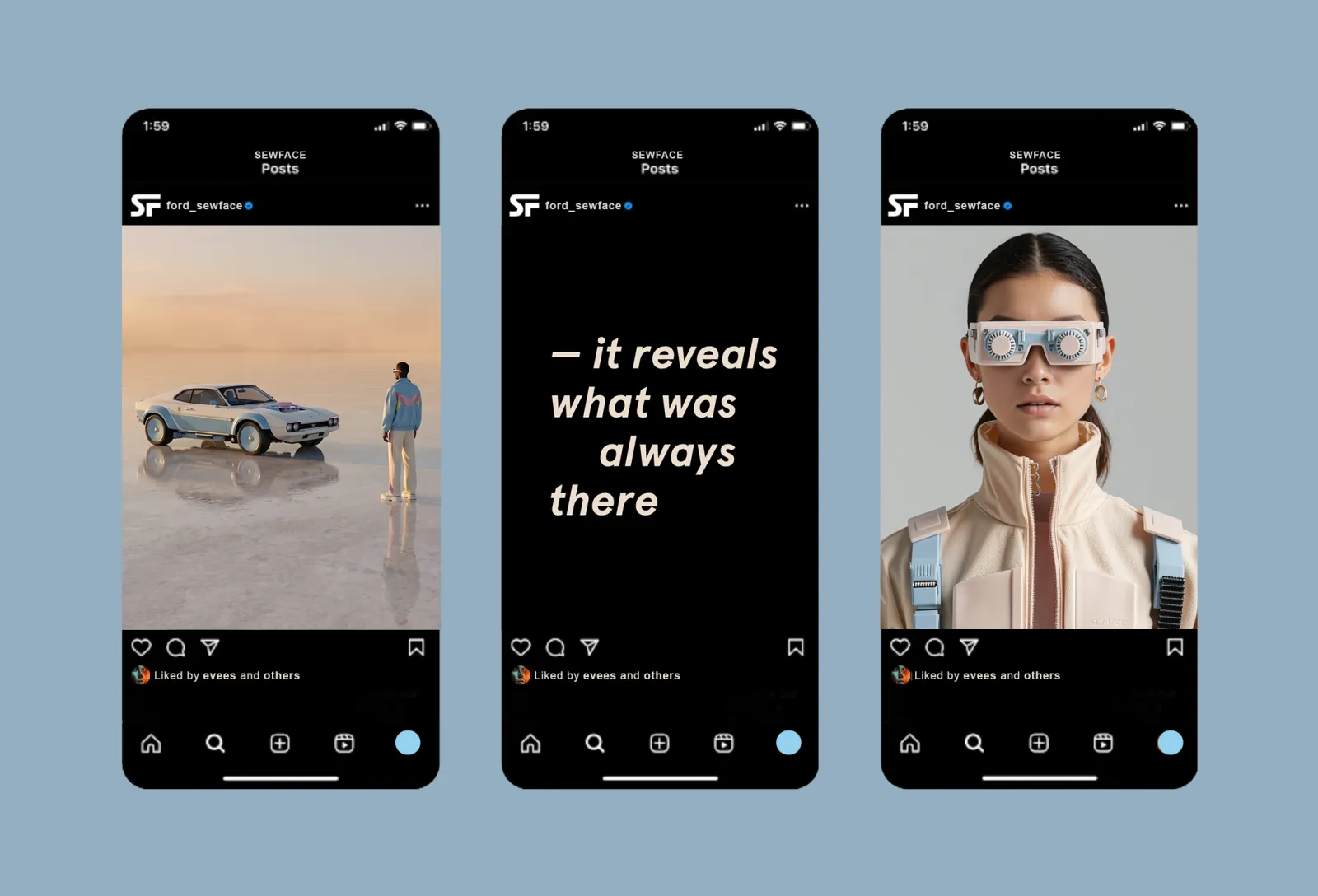
sewface holds.
The car is not the whole project. It is part of the evidence: a scaled expression of a system that has already shown it can travel.
The question is not whether AI can generate a visual language. It can. The question is whether that language can stay anchored, directed and recognisable under change.
The material language is reorganised, reconstructed and seen again — recognisable across objects, surfaces, motion and time.





The problem
Generative imagery tends to drift. Could we create a visual language that remains recognisable as everything around it changes — then build a generative system capable of producing controlled outputs within that language?
What we tested
Training, prompting, systems architecture, control, selection and transfer.
The result
Recognisable. Repeatable. Controllable. Distinct.
System, not style.
sewface holds through direction, not automation.
A generative system does not remove judgement. It creates repeatable cues, controlled variation and enough consistency to carry a visual language forward.
Rules. Transfer. Consistency under change.
Developed as part of a final project for the Master’s in Generative AI for Creatives at LABASAD, Barcelona School of Arts & Design.